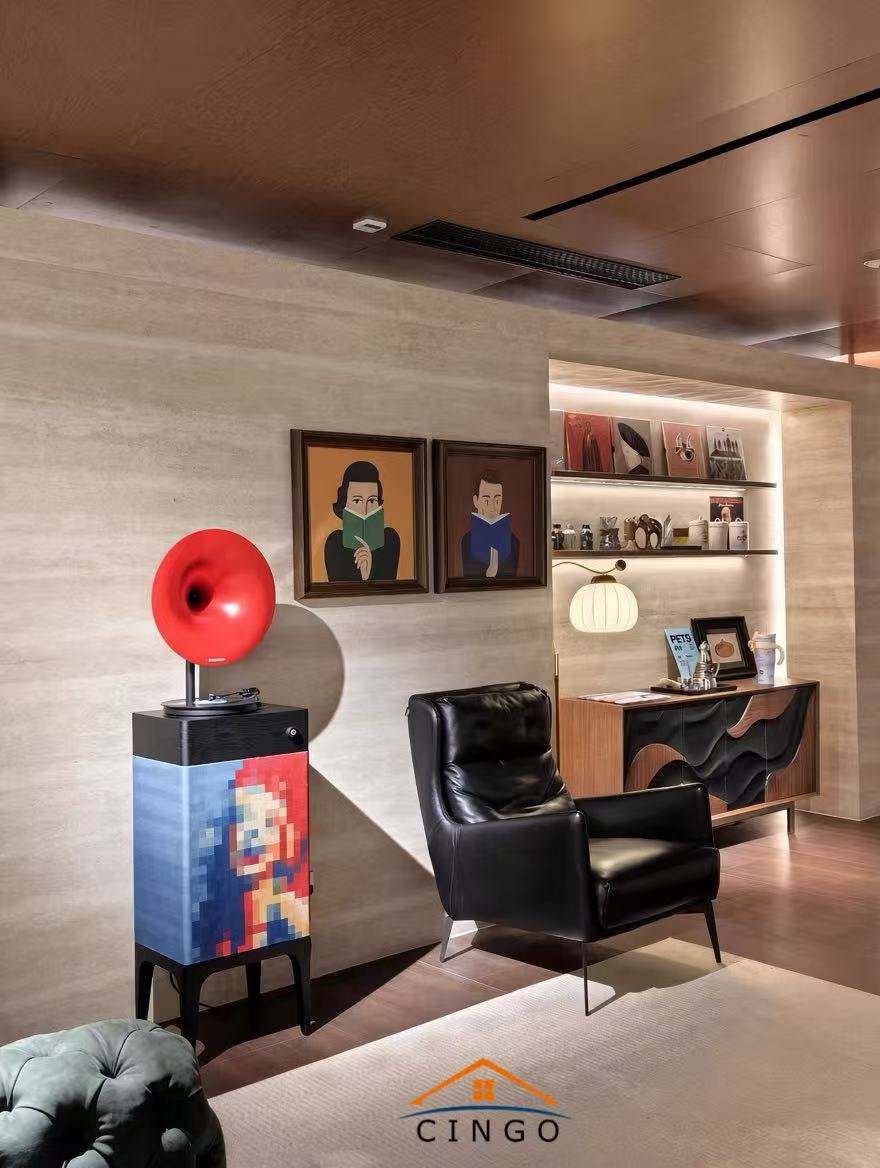
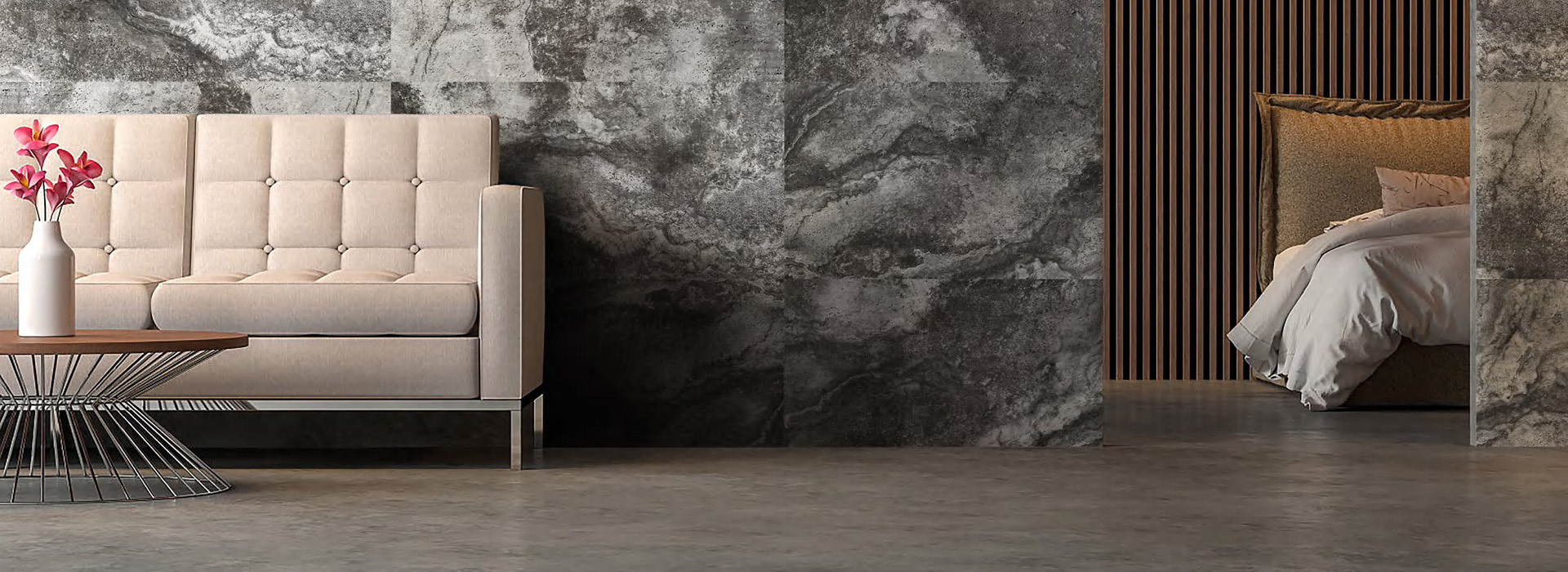
Travertine Flexi Stone is widely specified for architectural facades and interior accents, valued for its authentic porous aesthetic, lightweight design, and superior flexibility on curved geometry. To preserve its distinctive natural appearance over time, correct adhesive pairing and systematic surface protection are essential.
This technical guide outlines best-practice installation methods, engineered surface-sealing protocols, and site management practices designed to achieve pristine, long-lasting visual results.
The Technical Mechanism Behind Post-Installation Adhesive Bleed-Through
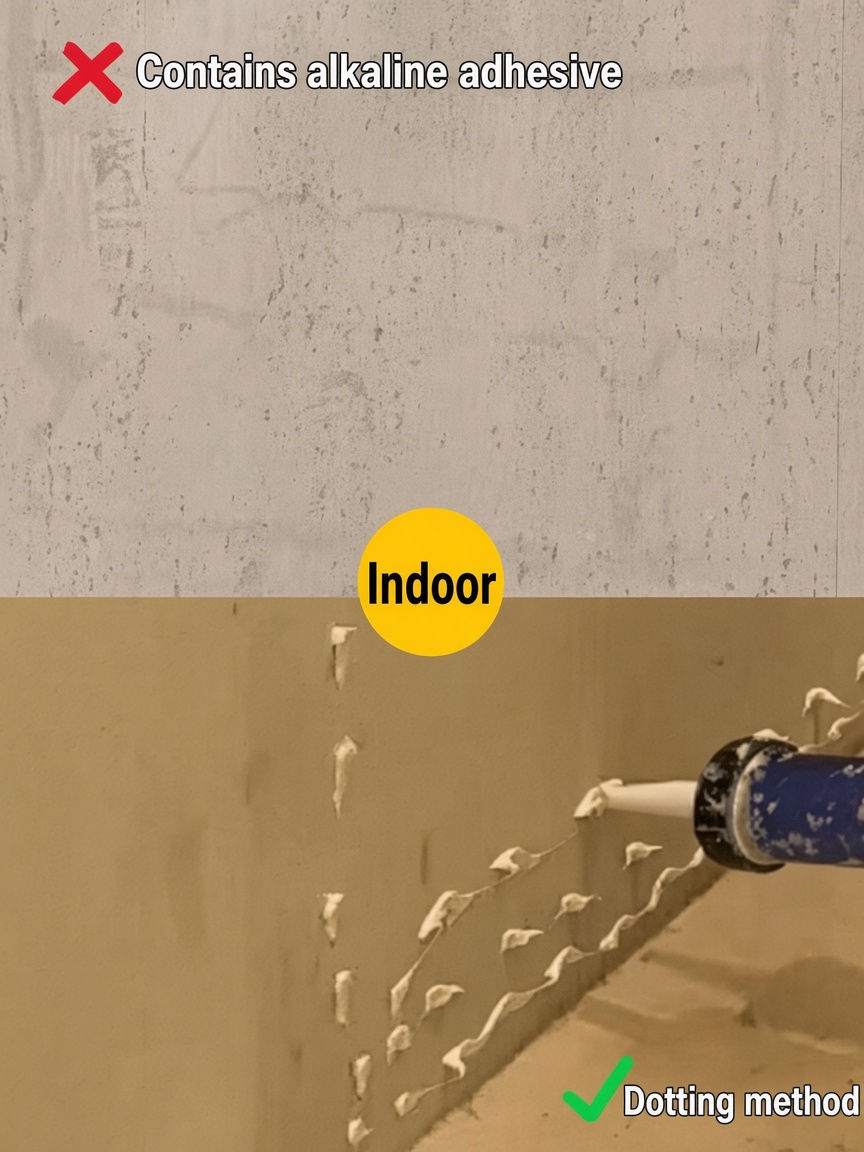
Many site managers and DIY contractors fail to notice initial application errors because modern mounting adhesives remain semi-transparent while wet. As cure cycles complete over two to four weeks, dark or chalky-white stains emerge across the stone surface.
1. High Porosity and Micro-Capillary Migration
Travertine-style Flexi Stone features open-pore aesthetics designed to replicate natural tufa stone. Because the composite material is vapor-permeable, heavy liquid adhesives applied via thick-bed methods migrate through the micro-capillaries of the backing directly to the front surface.
2. Micro-Stress Exudation on Curved Surfaces
When installing around columns, arches, or radiused corners, bending forces squeeze the uncured adhesive bed. This internal pressure forces excess liquid glue up through the porous cavities, creating concentrated lines of adhesive overflow along the bend points.
3. Dust Accumulation and White Spotting
As the adhesive cures completely:
Indoor Timelines: Within 30 days, the cured polymer resin turns white and reflective, sharply contrasting against the natural earth tones of the stone.
High-Traffic Commercial Spaces: In retail storefronts or public hubs, environmental dust adheres to wet glue residue within 14 days, resulting in highly noticeable gray-white blotches that permanently degrade the aesthetic value.
Remediation Limitations and Reworking Expenses
| Issue Level | Cleaning / Repair Feasibility | Estimated Remediation Impact |
| Light Surface Residue | Wipe down using specialized stone glue remover and light buffing. | Partial Mitigation Only: Removes surface film but cannot extract resin trapped within deep micro-pores. Staining typically recurs over time. |
| Severe Deep Bleed-Through | Irreparable: Chemical solvents dissolve the surface texture and ruin the natural travertine pattern. | Full Wall Replacement Required: Demolition frequently damages the backing drywall or cement board, requiring structural surface prep and new materials. |
Standard Operating Procedure (SOP): Preventing Flexi Stone Glue Stains
To prevent costly tear-downs and ensure a zero-defect installation, project crews must enforce the following three-step protocol:
Step 1: Thin-Bed Dot-Dabbing & Edge Clearing
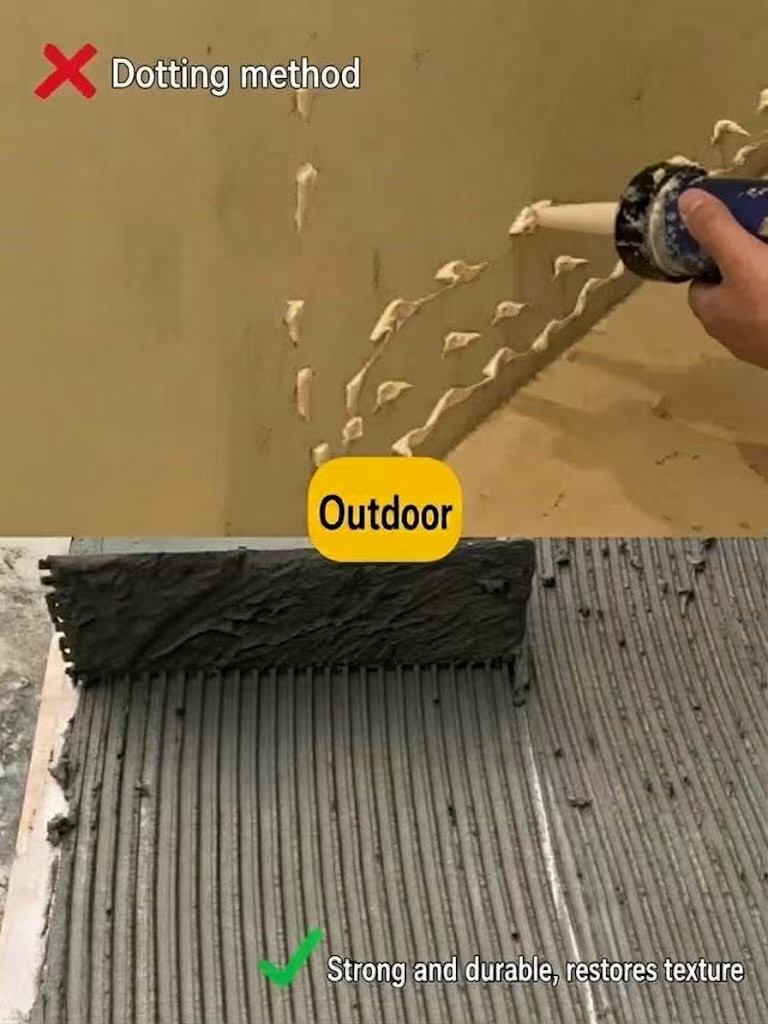
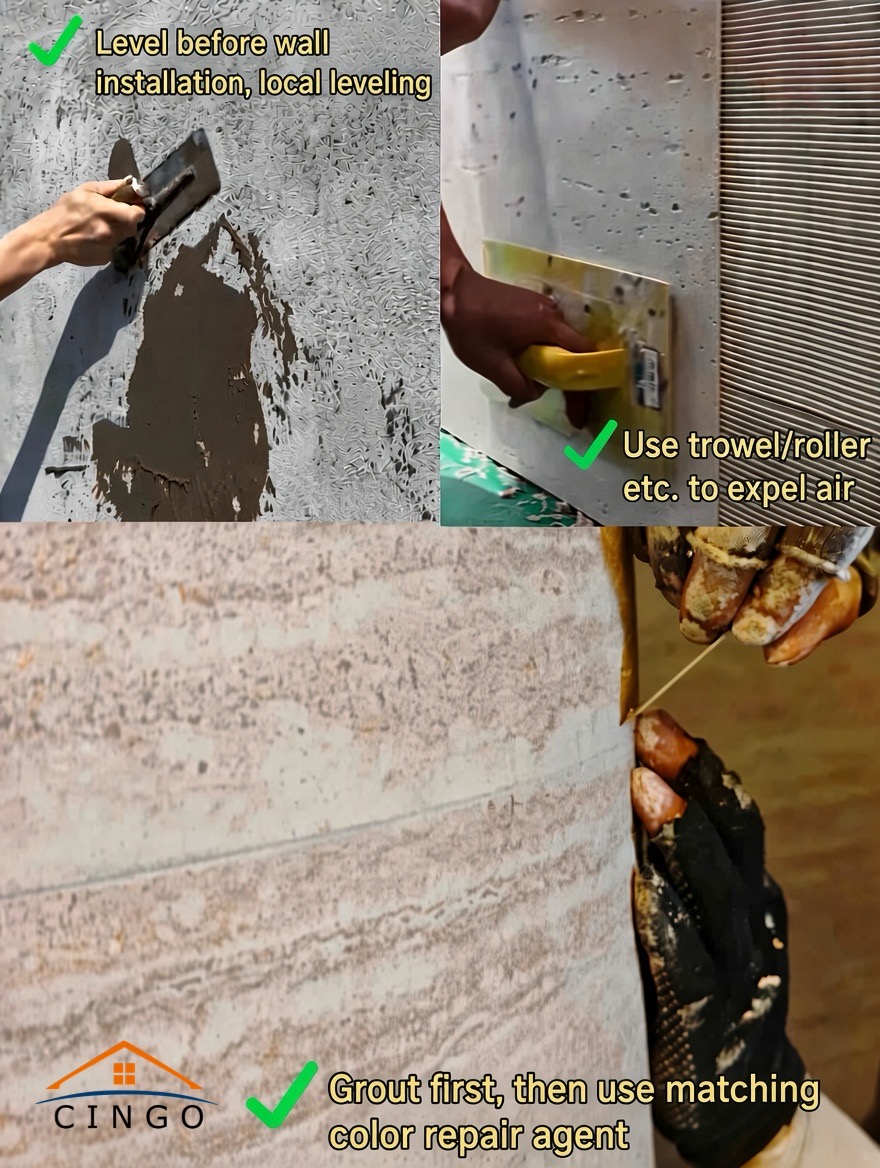
Never apply heavy continuous trowel lines across porous travertine tiles. Use a thin-bed spread or dot-bonding technique with low-moisture, fast-curing polymer adhesives. Immediately wipe down seam margins with a dry micro-fiber cloth to clear excess adhesive before curing begins.
Step 2: Dual-Coat Pore Sealing Protection
Apply two coats of transparent, hydrophobic stone sealer across the front surface immediately following panel placement. This seal locks the surface pores, blocking internal glue exudation and preventing exterior moisture, dirt, and oil from staining the facade.
Step 3: Specifying High-Density / Heavy-Duty Flexi Stone
For high-traffic commercial projects, specify thicker, high-density Flexi Stone variants. Higher mineral density significantly reduces micro-capillary pore diameter, acting as a natural physical barrier against adhesive migration.
High-Intent Technical FAQ
Q1: Why do adhesive stains appear on Flexi Stone weeks after the installation looks completed?
A: Wet adhesive is semi-transparent and visually blends with the stone's base color during initial bonding. As the solvent or moisture evaporates over a 15-to-30-day curing period, the remaining polymer resin hardens into an opaque, reflective white deposit. Additionally, open pores trap airborne dust over time, making previously invisible glue spots turn into dark, permanent stains.
Q2: Can chemical solvents fully remove glue stains that have seeped through travertine Flexi Stone?
A: No. While surface solvents can clean excess glue sitting on top of the tile, they cannot reach deep resin deposits embedded inside the porous stone matrix. Attempting aggressive abrasion or acid washing will erode the delicate travertine texture, causing irreversible patchiness and discoloration across the facade.
Q3: What is the most effective way to bond Flexi Stone onto curved walls without causing glue squeeze-out?
A: On curved surfaces, use a low-viscosity, rapid-tack thin-bed adhesive applied with a notched trowel rather than heavy blobs. Pre-flex the panel prior to bonding to relieve surface tension, press gently from the center outward to displace air, and instantly clean all edge joints before the adhesive sets.